

Receiving Feedback Graciously (Even When You Disagree) – with Guest Mentor Hugh Molotsi
Hugh Molotsi, board member at Barloworld and Mozilla and former VP at Intuit, joins me to talk about receiving feedback graciously—even when you think it's wrong.

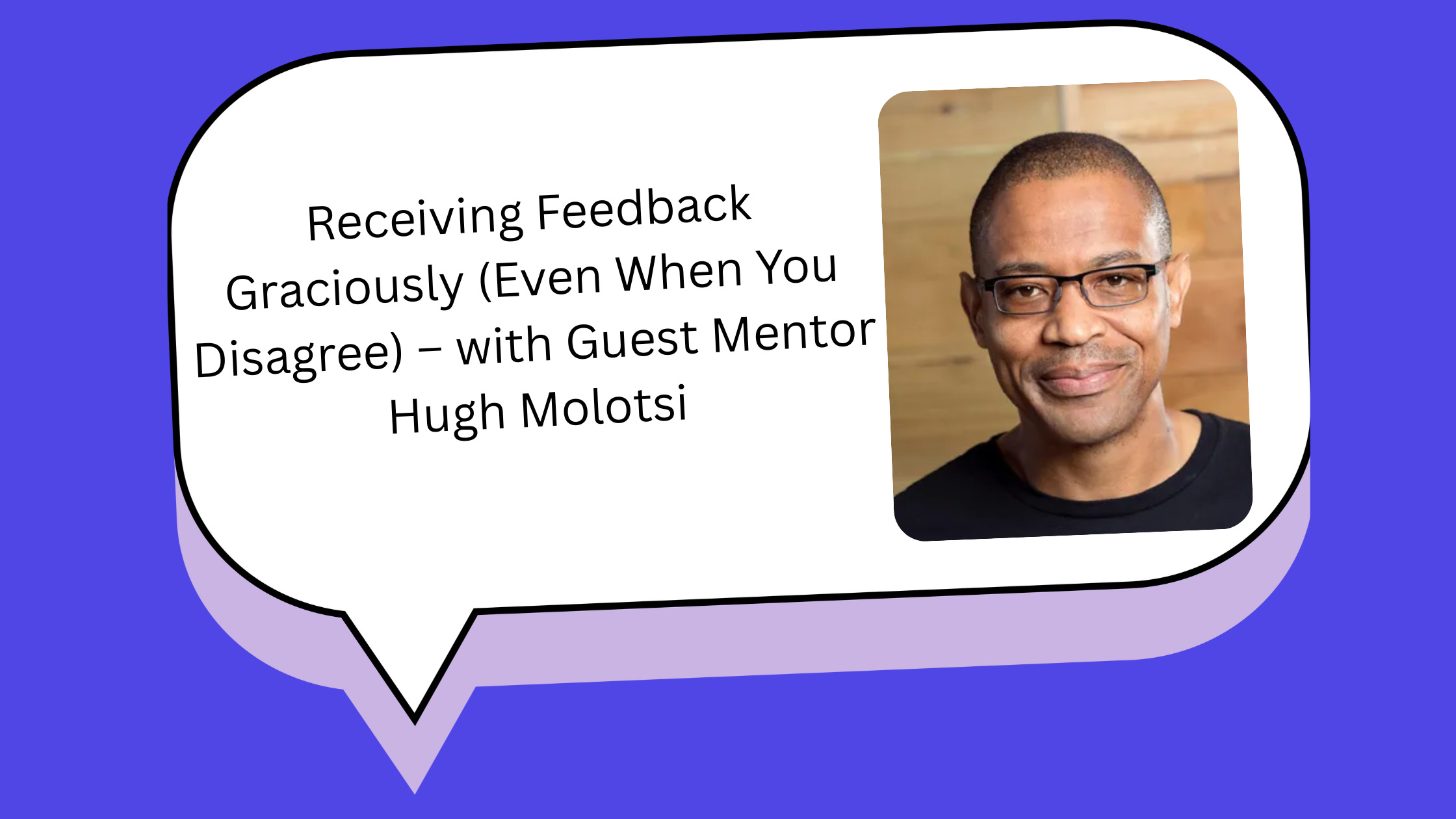
Hugh Molotsi serves on the boards of Barloworld and Mozilla and is co-author of The Intrapreneur’s Journey. He was formerly President and CTO of BuyNothing and VP of Innovation and Engineering Fellow at Intuit. In this conversation, he talks about one of the most underrated career skills: receiving feedback well, especially when your brain is screaming that the feedback is wrong.
We all know feedback is critical for growth. But here’s the hard truth: how you receive feedback matters as much as the feedback itself. When you get defensive, shut down, or argue back, you train people not to be honest with you. The problem? Our brains are wired to see feedback as a threat. So how do you stay gracious when every instinct is telling you to fight back—especially when you think the feedback is wrong?
Cassie: We all know feedback is important for growth, but most of us still get defensive when we receive it. What’s actually happening when we react that way?
Hugh: When we receive constructive feedback, we naturally feel attacked. The pesky amygdala part of our brain takes over and we go into fight-or-flight mode. We’re no longer listening and treat the feedback giver as our adversary. It’s particularly hard to listen to feedback when we disagree with it.
Let’s face it—you’re going to receive feedback that is based on misunderstanding, incomplete or incorrect information from time to time. But here’s the thing: receiving feedback graciously doesn’t mean you have to agree with all of it or take action on it. I liken it to receiving a Christmas sweater from your grandmother. You should sincerely thank her for the gift, but you don’t have to wear a sweater you don’t like. Keeping in mind that you always get to decide what you do with the feedback will hopefully help you be gracious and keep the amygdala at bay!
Cassie: That’s such a helpful reframe. So when you’re in that moment receiving feedback—especially feedback you think is wrong—what’s your process for staying gracious?
Hugh: Here are some steps that may help:
Listen actively – Let the feedback giver talk without interruption and then play back to them what you just heard in your own words.
Thank the person giving you feedback – Even when you completely disagree with the feedback, you can be thankful that the person has taken the uncomfortable step to deliver a difficult message. The easier route would have been to complain or gossip to someone else. Your positive response also builds trust with this person and builds your personal brand that you receive feedback well.
Acknowledge the portions of the feedback that resonate – Listen carefully to the full content of the message being delivered and call out the parts you agree with. Being vulnerable in this way goes a long way in making the experience for the feedback giver a good one. It also signals your genuine desire to improve and that the whole exercise won’t be a waste of time.
Ask questions to gain clarity – For the portions of the feedback you don’t agree with, allow for the possibility that you may be the one who misunderstands or has incomplete or incorrect information. Ask clarifying questions that work back down the ladder of inference without being accusatory.
Cassie: What about when the feedback involves something you did that hurt someone—even if you think their reaction wasn’t reasonable?
Hugh: Apologize sincerely (when appropriate) – When your actions have hurt someone’s feelings (whether or not you feel their reaction is reasonable), you can always apologize for how you made them feel (and mean it!).
Share your perspective – Only after you have achieved the goodwill of the earlier steps should you offer to share your own perspective and provide missing information or correct any misinformation. Use this opportunity to express what was going on emotionally below the surface for you. When the feedback is about an interaction (”you were rude to Tanya”), you can provide valuable insight by sharing what you were feeling (”I was worried the meeting I was facilitating wouldn’t end on time when I cut her off”).
Share what you will do to follow up (when appropriate) – If there is a specific action you need to take, share your commitment to follow through with a specific timeframe. If you are committing to improving behavior, ask the feedback giver to provide ongoing feedback to help you.
An absolute no-no: Don’t use this interaction as an opportunity to give the feedback giver your own feedback. This is classic defensive behavior and is unlikely to be helpful. Anything you say will likely be interpreted as unfair retaliation. If you do have genuine feedback to share, wait for an opportunity in the future to give it.
Cassie: This is so practical. For someone who struggles with receiving feedback, what’s the one mindset shift that makes the biggest difference?
Hugh: Remember that if you don’t make the experience for the person giving you feedback a pleasant one, they are less likely to give you candid and direct feedback in the future—which is only to your own detriment. And here’s the liberating part: receiving feedback graciously doesn’t mean you have to agree with all of it or take action on it. You always get to decide what you do with the feedback. That mindset shift—knowing you’re in control of what happens next—helps you stay gracious in the moment.
Thanks, Hugh, for the reminder that receiving feedback well is a career superpower—and that we always get to decide what we do with it.